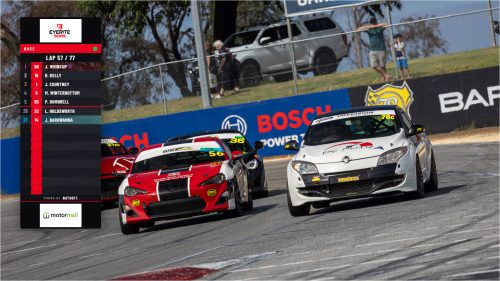
This article is written by Turn 7 Media’s owner and founder – Shane Lawrie.
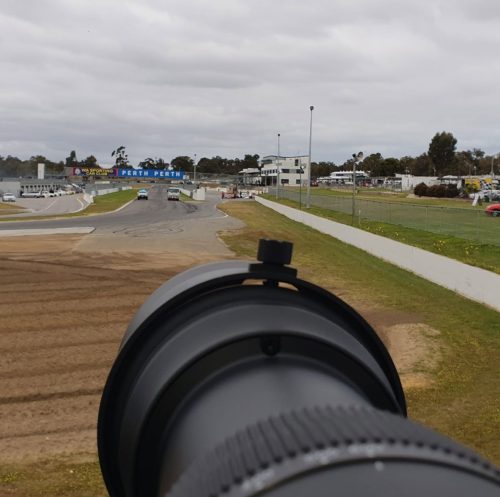
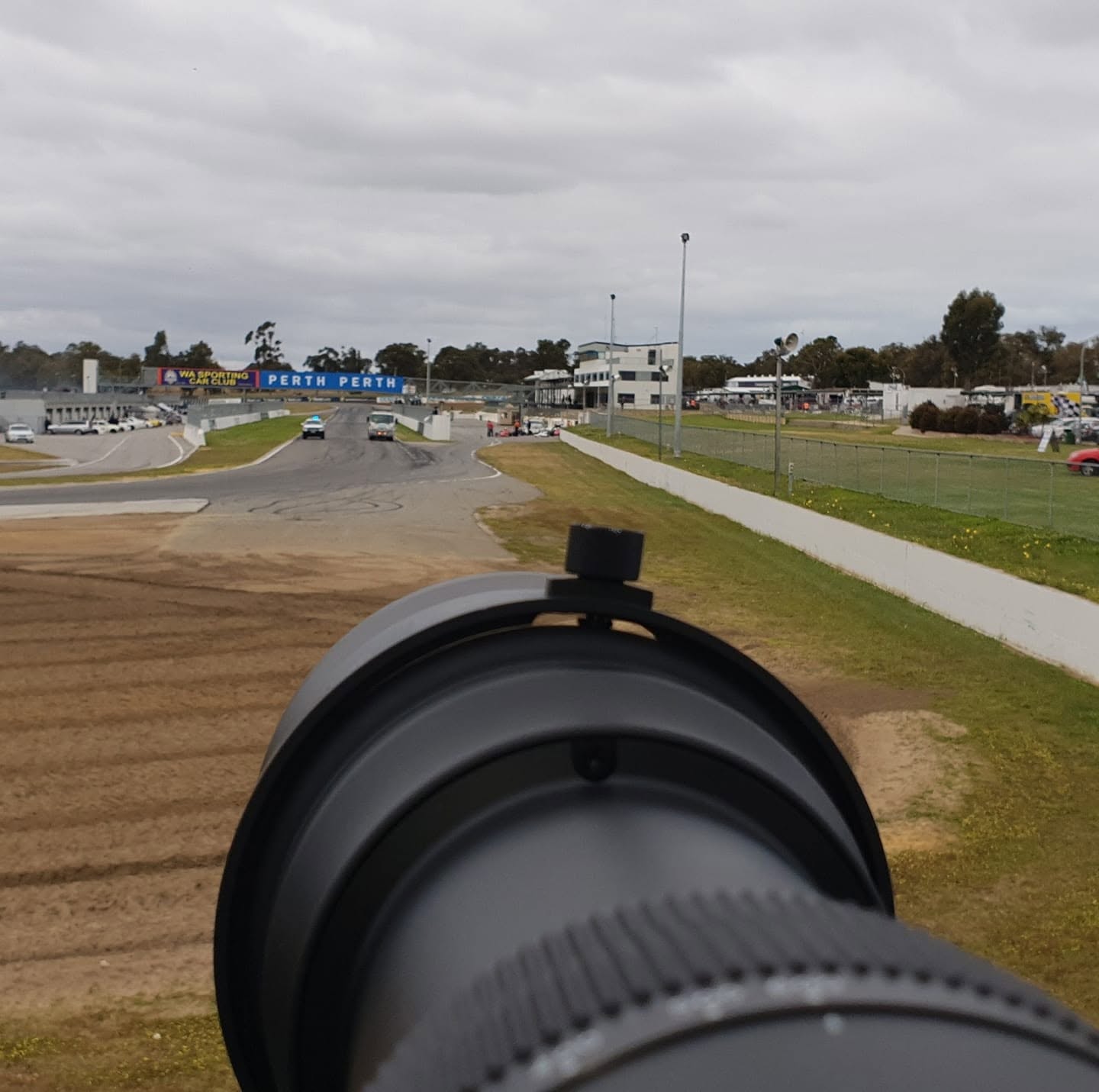
Back then the place still carried Alf Barbagallo’s name on the gate — it ran as Barbagallo Raceway until the end of 2018 before reverting to Wanneroo Raceway, then to CARCO Raceway and its current naming rights of MotorMall Wanneroo Raceway. It’s one of the rare circuits where the spectator areas are genuinely good for a camera: low fences, plenty of vantage points, corners you can frame without a marshal’s post in the way. That’s where this started. A bloke shooting under the name BeardySnaps, standing where the public stands, working out the light.
In 2018, still early and still mostly self-taught, I sat in on a photography workshop run by Manuel Goria — an Italian who called Perth home and carried a serious motorsport CV, including team photographer work at the Formula 1 level. The thing that stuck wasn’t a camera setting. It was the reset in how to look at an event. I’d been chasing the perfect technical frame — sharp, exposed, the textbook shot — and Goria’s whole push was to stop fixating on that and read the rest of it. The people. The pits. The officials. The moments either side of the action that everyone else ignores while they wait for the car. An event isn’t one hero image, it’s a day full of them, and honestly most of the good ones aren’t the car at the apex. Changed what I pointed the camera at, and it’s still how we cover a race day now.
The photo I chose not to publish
Before the phone call that changed everything, there was a photo I decided not to take public. A car caught fire out on the circuit, and I was the one standing in the right spot with a clear, clean shot of it. The kind of frame that travels. Published, it almost certainly would have gone viral — papers, websites, the lot.
Then the team involved reached out. They’d worked out it was me standing there, and they asked me not to publish the photos at all. I could’ve said no. The shot was mine, taken from where I was entitled to be. But I honoured the request and the photos never went out — and I still reckon it was the right call, and not just on principle. Publishing might’ve been a flash in the pan. One viral image, a week of attention, then nothing… Not publishing built something instead. I’m convinced that one decision is what led to everything that followed.
The phone call that changed the scale
Because what followed came on a Friday. Megan Epple from Arise Racing rang and asked me to come and shoot a test session with Nick Percat. That call wasn’t out of the blue — it came because of how the earlier situation had been handled, not in spite of it. Those test photos ended up running across Australia and around the world. Arise also helped push my initial Motorsport Australia accreditation through so I could shoot the following weekend properly — inside the fence this time, where the access matched the intent.
The vest didn’t arrive in time. So I wore a plain one and got on with it. Which prompted one of the accredited photographers to complain that I was being allowed into the dummy grid staging area — despite me having Motorsport Australia’s approval to be standing exactly there. A complaint lodged over a plain vest. That turned out to be a bit of a preview of the next few years.
From there it moved fast. A short stint supplying Arise Racing with team photos. The Arise Racing Driver Search. Nick Percat bought photos. Then the WA Sporting Car Club came asking, and drivers and teams started finding me directly — Chase Hoy, Andrew Malkin, the Saloon Cars crowd, April Welsh, the Excel Cup field and so many more. Word travels in a paddock faster than anywhere.
Writing, video, and a global platform
Photography wasn’t the whole picture. In 2019 and 2020 I wrote for DriveTribe — the platform built by Jeremy Clarkson, James May and Richard Hammond. The articles ranged from serious race coverage and serious subjects, like the treatment of women in motorsport, through to the deliberately click-baity “AU bumpers on exotic cars,” which got a lot of traction — some of it good, some of it less so. There was a Women in Motorsport feature video in there too.
Just before COVID, DJ Laubscher and I recorded an entire race meet between the two of us — interviews, content, the lot, two people covering a full day. It was a sign of where things were heading, even if we didn’t know it yet.
The work travelled in those years too. Across 2019 to 2021 I shot events further afield — Sepang in Malaysia, Sydney Motorsport Park, Bathurst, The Bend in South Australia — covering a range of categories well beyond the home circuit. The one that got away was the 2020 Australian Grand Prix in Melbourne. I had the accreditation sorted, but the rumours that the event wouldn’t go ahead were already swirling, so I held off booking the flight — and the rumours turned out to be right. The Grand Prix was called off before it started. The credential was as close as I got. F1 is still on the to-do list.
The Forest Rally and the relay run
2020 also brought the kind of job that proves whether you can actually deliver under pressure: the Make Smoking History Forest Rally. Rally’s a different animal to circuit work — the stages are spread across forest, there’s no single vantage point, and you can’t just walk back to a truck between sessions. We set out to deliver five videos across the day, each as close to live as the format allows. And we pulled it off with a relay team physically running the camera cards in from the operators out on the stages, so we could edit and turn content around while the rally was still going. The trust to even attempt something like that came from Justin Hunt, who backed us to run his event coverage that way before we’d properly proven we could.
That relationship carried into the inaugural Joondalup Festival of Motoring, where we worked with Justin again and delivered five videos across the two days of the event. Two different events, same approach: commit to a near-live delivery target, build the workflow to hit it, and show the work as it happens rather than weeks later.
The same year I launched the Behind the Sport podcast with Brent Peters — first episode, “The Bants Begin,” went out 1 April 2020, right as COVID shut the gates. Sitting down each week with racers, teams and the people who run the events turned into one of the most useful things I’ve done in this whole game. Hours of conversation with the exact community the coverage serves. A lot of what we understand about what this audience actually wants came straight out of those chats.
Then COVID hit and everything stopped. There was a sim racing league in there that I walked away from — abuse aimed at the young kids taking part, among other things, and that’s a line. Not everything from that period is worth keeping. The work that mattered survived it.
Bring me a plan
As things opened back up, I was shooting a livery launch for Andrew Malkin and decided it was finally time to meet Andrew Stachewicz, the GM of WASCC, in person — we’d spoken on the phone a few times by then. We had a conversation. I said some version of “the club should…” and he said, “Everyone tries to tell me what to do but never brings me a plan.”
So I brought a plan. After a fairly stressful weekend — and with my partner at the time doing a heroic job of keeping me from losing the plot over it — a proposal came together. Around the same time I registered Turn 7 Media, moving on from the BeardySnaps name. The proposal was simple: highlight reels, interviews and more for the return to racing.
The first round back, it was four of us. Me, DJ, Chris Mitchell and Jarrod Maclean — J Mac. Chris and Jarrod rotated on camera and interview duties; DJ and I chased footage and photos. We pushed content out across the day with quick edits, photos, and interviews run live as we went. The response to that fast turnaround was strong enough that the team started to grow.
Benny came next — you’ll find him as @broadcastbenny — along with a rotating cast of camera operators. We had high turnover, and the reason is worth stating plainly: we weren’t doing cinematic work, and a lot of operators wanted to do cinematic work. That’s fine. What we were building needed people who wanted to cover racing fast and honestly, not build a showreel. Through the middle years Bridget Belle came on as on-air talent, running interviews and self-operating a camera when the situation called for it — handling both sides of the lens on the same day, which is harder than it sounds and rarer than it should be. Eventually we added Scott on photography — one of the few accredited shooters in the early days who actually wasn’t difficult to work with.
The part nobody enjoys talking about
The first few months drew threats, verbal and physical, and a run of invented stories spread around the WA motorsport community. The one that still gets me is the claim that we were asking for exclusivity. I have never asked for exclusivity. Not then, not now. The more the merrier — that has been the position from day one and it hasn’t moved.
One of those stories is worth telling, just to show the shape of them. Leading up to an event, another media person went to one of our clients and accused us, in advance, of bullying his young son. I rang him, talked it through, and gave him my word our guys would help him and his son do whatever they needed on the day. At the event itself he stood there — with someone else present — and gushed about how helpful the crew had been. Then later that week he went back to our client with the same bullying accusation, claimed we’d blocked him from the spots he needed, and the flow-on was that our client got told they couldn’t do their own work. Two things put that one to bed. The person standing beside me when he’d praised the crew was in the later conversation too, and shut it down fast. And his own released edit had footage shot from the very spots he said we’d blocked him out of. You can’t be blocked from a position and file the shot from it.
Every time we tried something new — a drone, a different camera placement — a complaint would land with the officials. What saved us is that the Motorsport Australia officials in Western Australia were, and still are, genuinely supportive, and they dismissed those complaints for what they were. Most of the people who lodged them have long since drifted away.
One person who believed early was Andrew Stachewicz, the WASCC GM at the time. He backed what we were doing before there was much evidence it would work. He unfortunately passed before he could see the full scale of what it would become, and the project carries a debt to him for that early faith. Lauren Cornes was another early supporter from that era — she now works for us as our on-site producer.
From highlight reels to a live broadcast
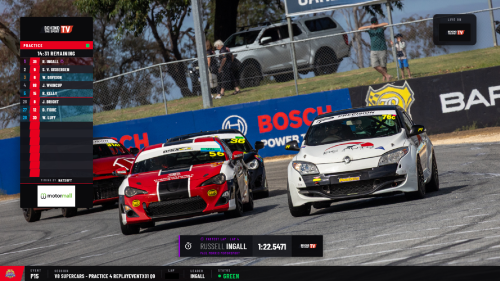
The next GM, David Pitts, brought live streaming to the table when Streamer approached the club — a push that came via BD Soutar-Dawson, drawing on his experience with the karting side of things. We didn’t rush it. It took roughly a year of testing to land on a solution we trusted, then two live stream tests across 2024 to prove it on real race days.
In 2025 the live stream went in officially. Every category except Production Cars, Formula Ford and Formula Classic came on board, and in return they got race replays, interviews, on-board cameras and more. Production Cars join the stream in 2026. Formula Ford and Formula Classic are still the hold-outs — the door’s open whenever they want it.
Mid-2025 brought another change at the top of the club, with Russell Avis stepping in as GM — a name plenty in the scene will know from his years running Summernats over in Canberra. Changes of management can be the moment a project like ours gets quietly dropped; this one wasn’t. The relationship carried on and the live stream carried on with it, which says something about how embedded the coverage has become in what a WASCC race day actually is.
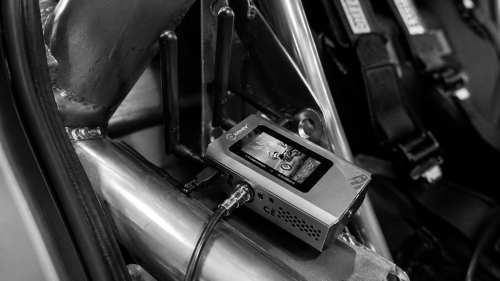
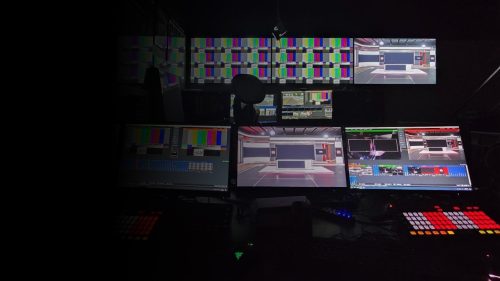
Here’s the bit worth being precise about, because it’s where most people assume wrong: we don’t have a broadcast truck. We remote produce. The crew that actually makes the show — director, tech director, replay, graphics and the rest — works from a fixed remote production facility off-site, while the camera operators, on-air talent and on-site producer are trackside. The two halves get stitched together over the wire. It’s not an OB truck parked in the infield. It’s a gallery somewhere else entirely, running a live race broadcast as if it were on the ground.
The crew that pulls a race day together now looks like this: one on-site producer, two on-air talent, five camera operators, a general hand, an in-car camera operator, a photographer, a replay operator, a director, a tech director, a graphics operator and a producer. On top of that, two commentators attached to WASCC call the racing on site, and the on-site audio tech makes sure their feed reaches us clean. That’s a long way from two blokes and a fence.
One of the quieter changes over those years has been the culture in the photography pack itself. The bitterness of the early days has largely left with the people who carried it. The shooters working now mostly get on — sharing spots, tips and tricks, looking out for each other. After everything the early period threw at us, that’s probably the change I’m most glad to see.
Where this goes next
The next step is to take more of the broadcast into our own hands, and that means partners. The plan is straightforward: bring brands on as on-air partners so the coverage runs as “WA Circuit Racing presented by…”, spanning both Wanneroo and Collie so circuit racing in this state gets covered properly, start to finish, across both venues.
The venue itself already understands this game. That run of naming-rights deals on the gate — Barbagallo, CARCO, now MotorMall — and an on-air partner on the broadcast are the same logic pointed at two different audiences: one reaches the people who drive through the gate, the other reaches everyone watching from home. We’re building the second one.
That’s the pitch, and it’s a genuine one. We’ve spent eight years building the thing a partner would be putting their name to — the crew, the remote production setup, the reach, the trust with the categories and the officials. The audience is already there and already watching. So if your brand wants to be part of how Western Australian circuit racing reaches that audience, get in touch and let’s have a chat about what it could look like. The more the merrier — that part hasn’t changed since the fence.